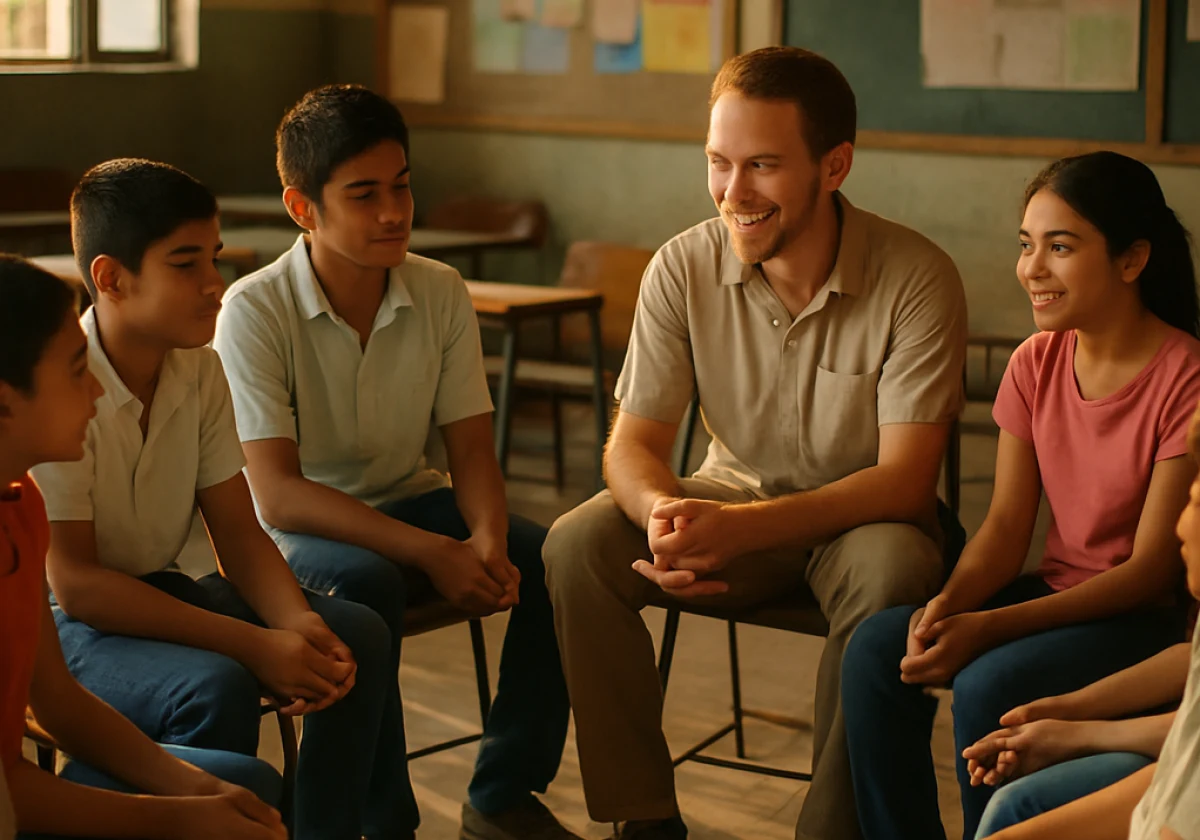
The funny, unexpected moments that define teaching overseas are the small daily mix-ups that teachers abroad never forget. For instance, you might plan a quiet grammar lesson, only to find yourself judging a hamster beauty contest by lunchtime.
Try explaining a day like that to someone back home. Nobody quite believes these teaching stories, which is why Tales From A Bar Stool exists as a place to park them. Every teacher abroad has a handful of unbelievable stories, and there’s always another expat ready with an even better one.
And there’s plenty to learn from these moments, too. This guide covers the funny classroom chaos and the quick-thinking teachers learn along the way. We’ll also share overseas teaching experiences you’ll want to remember for years.
Let’s jump into it.
Classroom Chaos: The Teaching Stories Nobody Warns You About

Your first day teaching abroad can bring a few surprises, especially when classroom routines differ from what you know back home. You might finish a lesson too early, struggle with a local word, or find out about a school event at the last minute.
You’ll likely face at least one of these three situations in your first year.
The Lesson Plan That Lasted Four Minutes
Picture yourself walking into your first class with forty minutes of English activities. You’ve printed and laminated everything, with each activity timed to the second.
But the students finish everything in just four minutes. Now twenty-six faces are looking at you, waiting for your next move. With thirty-six minutes still to fill, you grab a marker pen and think of a new activity. Moments like these teach you to handle surprises in class, even years later.
What Happens to Your Teaching Style When Children Correct Your Pronunciation?
Students will correct your pronunciation in front of the whole class, and they’re often right. You might even find out you’ve been saying the same word wrong for weeks.
One student in a Lisbon high school spent a term on “my mum says it differently”, while her friend insisted that “my way sounds nicer”. After all, English sounds different around the world, and students often learn the pronunciation they hear at home.
Because of this, you stop guarding your accent and start treating the classroom as a place where two people freely swap a language. In fact, ask a teacher who has returned home what they learned abroad, and they’ll often mention their students first.
Teacher Tales: Surprise Assemblies and Other Timetable Mysteries
Your timetable abroad doesn’t always go as planned. You might arrive ready for a grammar lesson, with no idea the school has other plans.
Just as you’re about to start, a colleague appears at your door and says, “Your class is already downstairs.” You follow them to the hall, where the whole school is practising a dance nobody told you about. So much for Tuesday’s grammar lesson.
If you’re anything like the teachers we hear from, the day you stop checking the printed schedule is the day the work gets easier. People who love teaching abroad make peace with that early.
Every Teacher Abroad Soon Learns That Nothing Goes to Plan

The best part about teaching abroad is how quickly you stop panicking when a day falls apart. You lose power mid-lesson, lose half the class to a dentist visit, and still manage to finish the lesson. That speed of recovery is the real impact of the job on the way you think.
In practice, you build a small mental list of fixes: a word game for dead time, songs to settle a restless class, and short stories to fill the last ten minutes. Teachers abroad carry that list through a whole teaching career, and it works in any school, anywhere.
That adaptability becomes even more useful in schools dealing with staffing shortages. UNESCO estimates the world needs 44 million more teachers by 2030.
What’s more, you stop reading a messy day as a failure, which changes how you talk to parents, students, and the person you were before.
Our writers who taught in Osaka and Quito agree that the chaos taught them how to handle surprises. They only began to enjoy teaching once they accepted that (the paperwork certainly never taught them that trick). And you’ll carry that same calm back home, even into jobs that have nothing to do with teaching.
What Do Overseas Teacher Experiences Teach You About Yourself?

Overseas teacher experiences teach you patience, quick thinking, and a sense of humour you never needed at home. With that foundation in place, you notice the changes long after you’ve left the staffroom for the last time.
By the end of your first year abroad, you may notice three changes in how you think and teach.
- Patience You Can Measure: Waiting out a noisy class without raising your voice becomes normal, and that patience follows you into every meeting and queue afterwards.
- Quick Thinking Under Pressure: Because the photocopier dies on exam morning, you learn to teach a full lesson from a whiteboard and one borrowed textbook. Plenty of success stories in the teaching profession start with a problem like that.
- Humour That Travels: Nothing builds a sense of community quite like laughing at your own mistake in front of thirty children who already noticed it.
Taken together, these three habits explain why so many educators learn so much during their year abroad. Years later, the stories people repeat are rarely about exam results. Instead, they remember the small, ordinary ways they helped students, and those memories often deepen their passion for teaching.
Collecting Expat Stories Worth Retelling Back Home
Most teachers remember the punchline but forget what happened before it, and that’s what makes expat stories interesting years later. Some stay pure comedy, while others become educational stories you use in class.
To keep those stories fresh in your memory, pick the method that fits how you already record things.
| Method | Best for | Time it takes |
|---|---|---|
| Voice note after class | Raw detail, exact quotes and audio stories | Two minutes |
| Phone photo plus caption | Visual moments and whole-class chaos | One minute |
| Weekly notebook page | Patterns across a full term | Ten minutes |
The trick is to capture each story while you still remember what everyone said and how the class reacted. Even a few hours later, you might forget the funniest part (especially after a long school day). Those little moments will give you plenty to laugh about when you read them years later.
Tell Stories From Your Own Classroom Abroad
After all those classroom surprises, it’s often the unexpected conversations with students that give you the funniest stories to tell. Every teacher abroad has a handful they’d love to share with others.
So, don’t let those memories fade. Start writing yours down this week, even if it’s just three lines on your phone after a strange Tuesday. Ten years later, you’ll be glad you saved the stories while the memories were still fresh.
And when you’re ready to share them, Tales From A Bar Stool collects honest travel and teaching stories from people who’ve lived them. Contact us to share yours. We’d love to hear your story.